Browse Items (11 total)
Sort by:
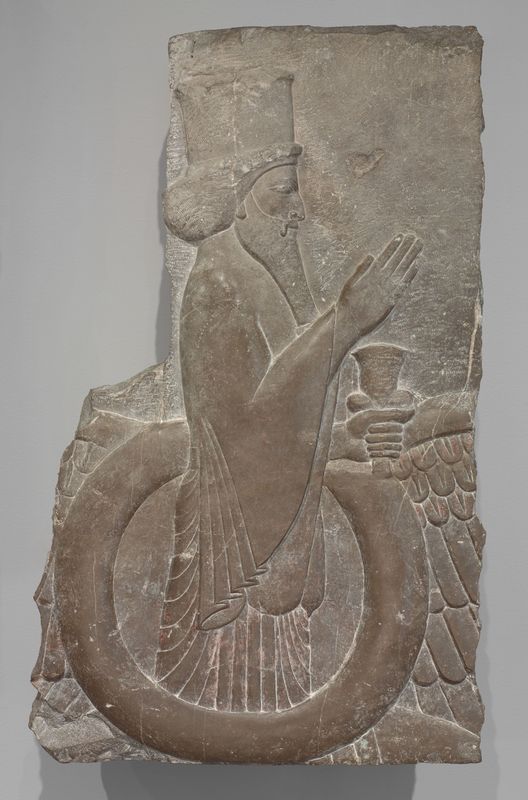
The Hall of 100 Columns, constructed for the Persian king Xerxes (r. 486–465 BCE), has multiple doorways that show a royal hero fighting mythical beasts and the king elevated by his troops and the empire’s subject peoples. Above the king hovers a…
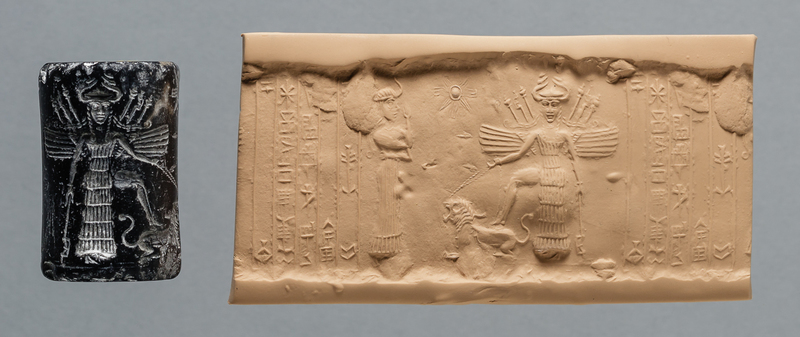
This seal was created in honor of the goddess Ninishkun, who is shown in the seal with the goddess Ishtar. Ishtar is restraining a lion with a leash, and she is holding a scimitar in her left hand.
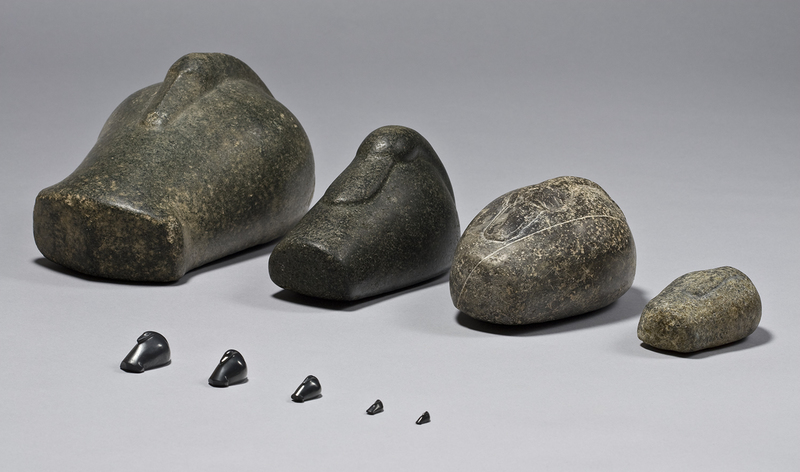
The Mesopotamians used sets of standard weights in conducting business and set stiff penalities for those who used false weights. The weights themselves were usually made of a very hard stone like hematite. A simple barrel shape was the most common…
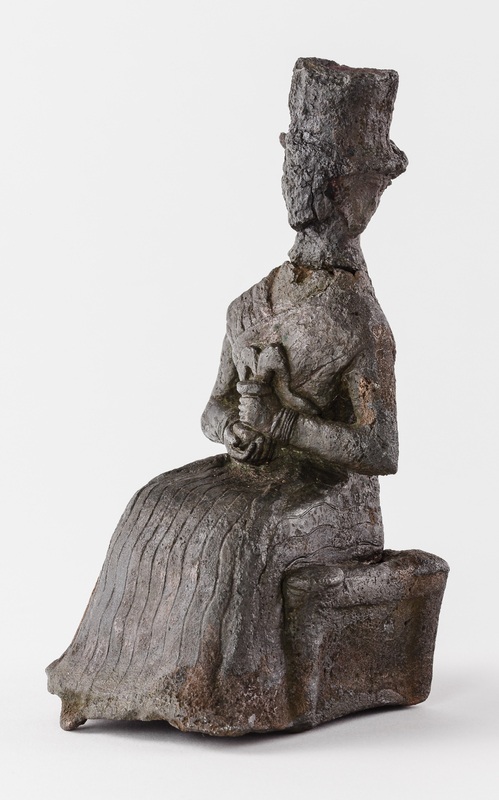
Illicit diggers found these four-faced statuettes, which may represent a god of the four winds and a goddess of rainstorms. The god wears a low cap with a pair of horns meeting above each face. He carries a scimitar in his right hand and places his…
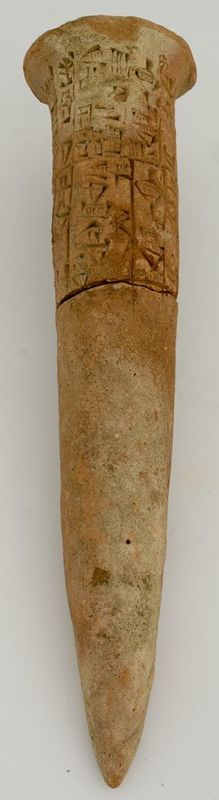
Terracotta cone-shaped foundation nail with a cuneiform inscription, written in Sumerian, in the upper half of the object, just below the nail head. The inscription is written in two columns around the shaft of the nail; the first column is the one…
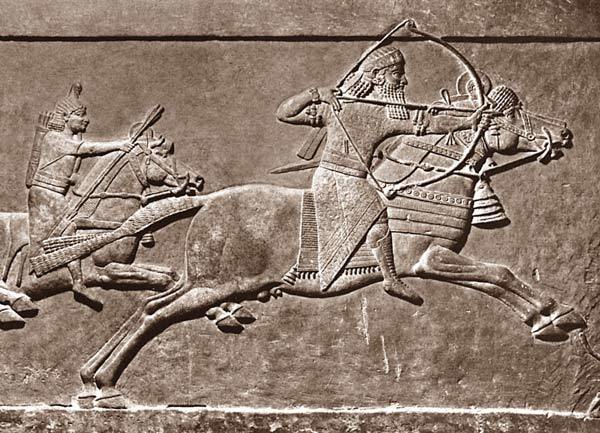
This is part of a series of sculptures which decorated a private gate chamber in the palace of King Ashurbanipal (reigned 669-630 BC).
The scenes are arranged in three registers, and are similar to those on other relief panels fallen from an upper…
The scenes are arranged in three registers, and are similar to those on other relief panels fallen from an upper…
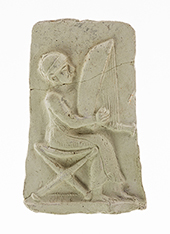
Harps are known from the earliest period of written history, but the fringed robe and close-fitting cap of this harpist are typical for the early second millennium B.C. in Mesopotamia. Clay plaques from this period depict musicians playing a variety…
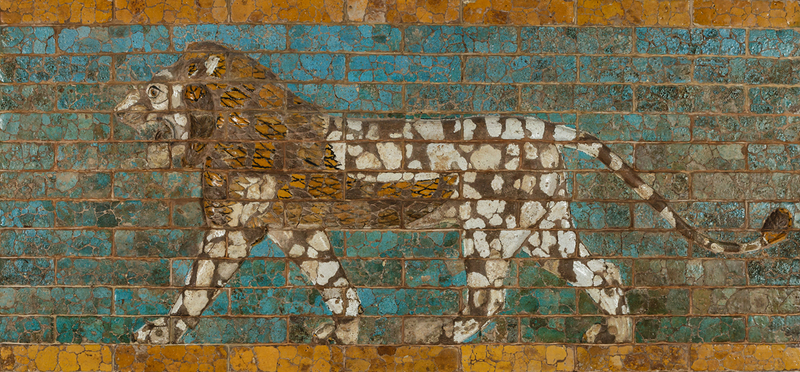
This colorful striding lion, its mouth opened in a threatening roar, once decorated a side of the 'Processional Way' in ancient Babylon (the Biblical city of Babel). The 'Processional Way' led out of the city through a massive gate named for the…